Showing posts with label Kate. Show all posts

Wednesday, 5 October 2016

My Critique of Immaterial Labours Market

"This is the most immediate sociological and anthropological implication of the passage of economic paradigms. Information, communication, knowledge and affect come to play a foundational role in the production process." (M. Hardt 2003 )
From the reading I assume that the market place I will be walking into will focus more on the exchange of feelings, memories or thoughts for some form of reward in return be it information or knowlege.


Overall at the entrance of the immaterial labours market we were welcomed by caution tape and construction site equipment. This gave the impression the we would be working for a reward and providing the ‘labour’ in a form of time banking. However overall the system of exchange was information or feelings  such as stress, secrets or a personal memories, in exchange for a gift. This worked well however not all groups had the same system of exchange, e.g. one group had a quilt which was given to someone else and it did not feel like exchange but time banking for someone else benefit. As Hardt states most services are based on the exchange of ideas and information which benefits both parties involved. Therefore, I feel like the quilt group followed the theme of immaterial labours the best as participants passed on their creative ideas by designing a panel. Participants were given a reward in the form of  hot beverage but the end product would be given to a children's hospital thus continuing the transfer of ideas.


Overall there was a variety of different offerings, however a few market stalls did not actively  participants in and few explained how they had interpreted the brief.  One of the strongest stalls in my opinion was in the dark room as participants we worked for our own reward, You had to spin the wheel and provide lighting thus giving your own energy, time and belongings to produce our own reward - the film as seen in the image below.


The final offering which I believe expressed immaterial labours in a unique was was the secrets group, participants would remove the burden of keeping a secret and the reward was a feeling of acceptance as all secrets could be viewed anonomously. 

The overall flow of the market worked very well as we did not wait in a queue and could go to whatever stall we wanted whenever we wanted.


Tuesday, 4 October 2016

Group Review Critic - Kristen, Laya, Kate, George, Zoe

Market of Immaterial Labours – Reviewer/Critic – Team 38 Kristen, Laya, Kate, George, Zoe


In the Market of Immaterial Labours, “information, communication, knowledge and affect come to play a fundamental role in the production process” (Hardt, 93).  Although the stalls generally involved some kind of labour – making or doing something, thinking or problem solving, and/or interacting with people, they often didn’t communicate this clearly enough. We felt that they weren’t cohesive enough with the entrance/exit theme, and there wasn’t as much of an atmosphere. Although some had systems of exchange, this often wasn’t communicated, but we inferred that for the most part it was the exchange of doing or creating something, and getting something back. However, the individual stalls were generally very engaging and entertaining.

For example, Quilt for a Cause involved contributing to a quilt for the children’s hospital, and getting coffee or tea in exchange.  The zoetrope stall, where you spin the wheel and provide the light giving your own time and energy for the reward – an animation.  In the secrets stall, you gave your secrets in exchange for humour and relief. Overall the market was enjoyable and well put together as a collective.

Tuesday, 27 September 2016

Participation Reflection


The time warp market it appealed to me as an example of experiential marketing making me express feelings and relate to the market offerings. (B. Schmitt 1999.)
As a participant I was directly integrated into the market with members speaking directly to me and encouraging involvement which ensured I was thoroughly lost in the ‘time warp’. The first part of the market brought me back to my childhood with finger painting and play dough which allowed for creativity and you could spend as little or as much time on your creations as you liked.

However as I got towards the end of the market the stalls stopped linking with one another and I accidentally missed a few stalls due to ending up downstairs after a stall. I spent the majority of my time waiting in various queues or stuck in a spot due to the mass of people which made the market lose some of its magic. In a few stalls I could not hear properly due to next-door stalls or music which ruined the atmosphere of the stall. The market also ended early, with the lights coming on as I was mid-way through an interactive experience, this ruined the whole mood and ensured the whole market lost its character within minutes.


Ideas about the next market
For our market we will need to ensure there is no queuing by having streams go in at certain times. If we did end up with a queue we could have members of the band playing around participants. We also took left over banners, balloons and paper from the market to be used in our own market by repurposing them.


Week 9 - Market Participation - Team Reflection

Market of Impossible Things – Participant – Group 38 Kristen, Laya, Kate, George 


As a team we entered the market together but soon found a lot of stalls needed set numbers of people and therefore we split up and didn’t stick with one another.

 The first section of the market on floor C was more immersive and all the stalls flowed together as the themes were similar, and the decorations helped transform the space. We didn’t quite understand the ideas of different times throughout the market flow, but found a majority of the displays to be very interactive and drew on our participation.

It was nice that some stalls required a high level of participation and others not as much so they could appeal to different people. Many groups approached us and informed us, but some groups didn’t do this as much and we were left to ask what was required from us.

 In the second half of the market, when you enter the pit area, we spent more time waiting than participating. Although we arrived at the market at 10am we were still in the market place at 11.30am when stalls started packing up. The waiting around drew us out of the market experience as we were left feeling bored.

Overall we enjoyed the market but wish there was less people/crowds and more time.

Thursday, 22 September 2016

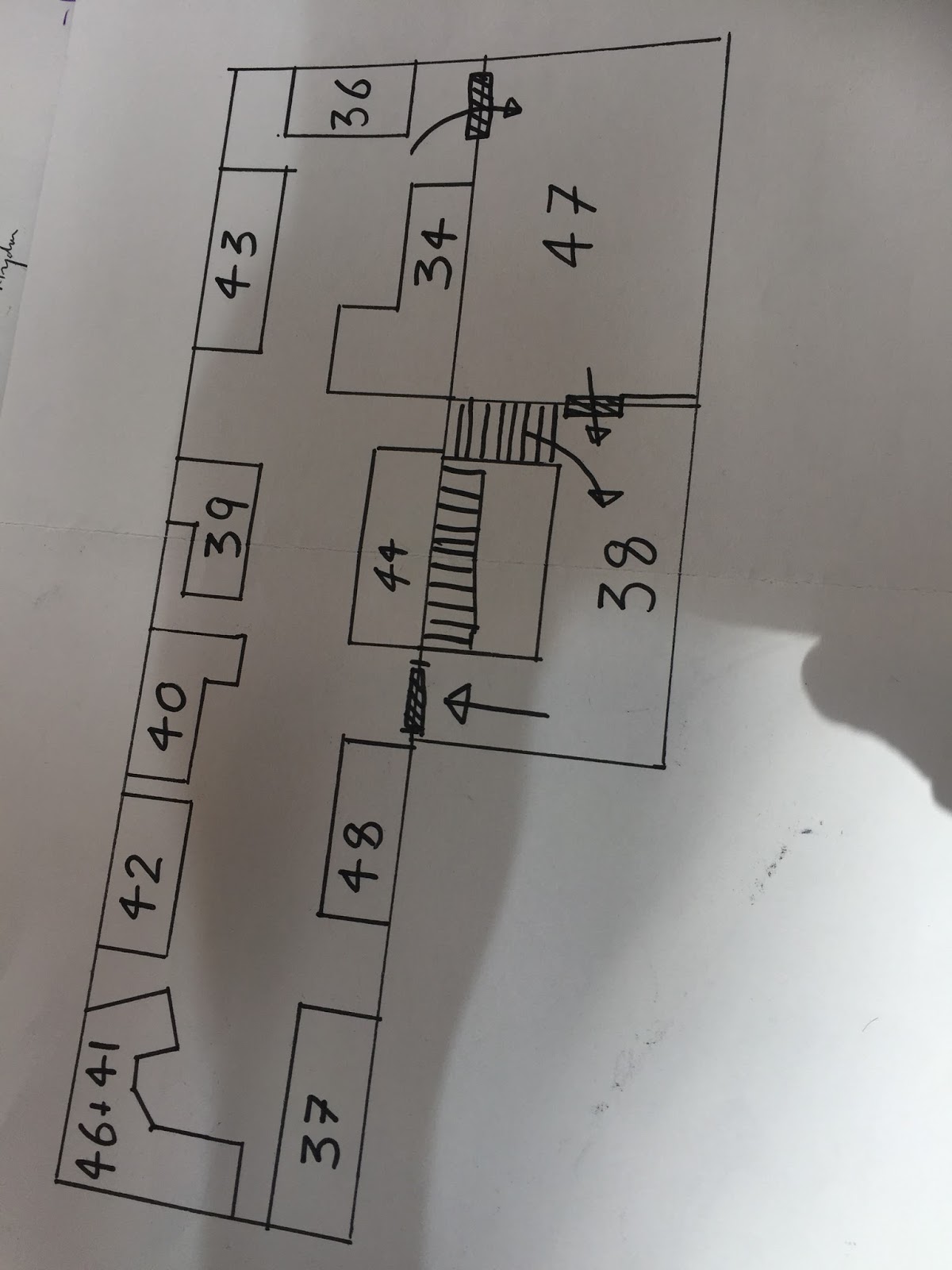
Page Layout for booklets / Map of the market

Basic Page Layout


Map of Market

Booklets

With only one group posting a fact I decided to research and find the facts for each group myself. By putting facts into the booklet this made them easier to create and more interesting for the people visiting the market. It also ensures the guests think about their own waste streams and how they can work to lessen this waste.

Booklet Facts

33  Pallet Kingdom 
Wooden Pallets account for 50% of pine and sprucer products and roughly half are only used once and then discarded straight into a landfill.

34  Brews and Banter (Roasted)
Less than 1% of takeaway coffee cups get recycled

36 Eighty sixes
Plant species are going extinct—about 5,000 times faster than they should, by creating your own small plant you can help slow down this process.

37 Paper toss
Recycling only 1 ton of paper saves around 682.5 gallons of oil, 26,500 liters of water and 17 trees.

29 Third Life 
10 litres of water is needed to make one piece of A4 paper and over 324 liters of water is used to make 1 kilogram of paper, By re-using and recycling our paper we cut that number almost in half.

40 The Jar Made Me Do It
Each NZ household uses an average of 500 glass bottles and jars annually, with a quarter heading to landfills where they will never decompose. So give your jars a second life.

41 Printsie
With all the paper we waste per year we could build 12 foot high wall of paper from Auckland to Invercargill and back again.

42 Nub
15-20 billion pencils are made a year. approximately 1/4 of each pencil is wasted when it gets too short to use. The wood will decompose, but the graphite doesn't.

43 The  Second Life Glass ( The Abandoned 5)
Glass can be recycled indefinitely, yet only about 22 percent of the glass produced today is from recycled materials. Produced from sand, lime and soda it uses about 40 percent more power to produce from raw materials than it does with recycled materials.

44 Fruit Fiesta
On average, food waste makes up over a third of kerbside rubbish collected in Wellington. Which costs about $599 for each household every year.

46 Crease (Caffein's)
Almost 50% of Massey University's waste come from paper or paper products. These can be reused to create something sustainable and long lasting.

47 Dream Catchers (Dream Team)
In our dreams we can only see people that we know or have seen before, leave your dreams at the door and relax as you take a journey with us.

48 A-Band-On-Materials
Any waste products can become instruments if you try hard enough, so we invite people to come and contribute to our jam.

Wednesday, 14 September 2016

Constructing Booklets

To make my booklets i cut up only Posters that were being taken down from the walls of Wellington. I then painted them black with old unused paint so that white pen could be used to write on them , ensuring that all the information on the could be read.


Proposal & Production Snapshot

Our Proposal and production Snapshot filled in with all the information needed to progress and help with our final marketplace.

https://docs.google.com/document/d/1XkGLSbLQpzMSLNoNLN1AiJieMk4t2rYvutXvWZjvNyo/edit

Wednesday, 7 September 2016

Time Lapse of the prototype market  which did not work. 


Sunday, 14 August 2016

Group Meeting - Monday 15th August

Kristen, Laya, Zoe, Kate.

Looking at what we are doing - 


Marketing, what would we do for the prototype market?

We could do a mood-board with all of the aspects of the market we will be using.

- posters
- marketing desk
- Uniform
- Brochures / maps?
- booklet: how to other teams stuff


What we want for next week:

To have a plan for our stall and idea. We would like to do:

Booklet - Map, then how to create other stalls things/what its made out of. Kristen
Posters - Laya - to advertise the event
T-shirt/uniform - Kate
Map - entire map for event - Zoe
The entrance way - a concept for people to walk in / an arch type thing? - George idea

Researching waste stream:


Where does old booklets go/brochures/magazines.

Researching our own waste streams = where does our waste end up?

Everyone is going to post our own waste streams in terms of advertisements/booklets/junkmail and where these things end up.

THIS IS DUE TOMORROW.

Friday, 5 August 2016

Google as an Adhocracy organisational System

"Dedication to experimentation and thinking outside the box unify the organization. Success to an adhocracy means staying on the cutting edge while maintaining status as an industry leader."

To remain as one of the most powerful companies on the planet google rely on an adhocracy organization system. Their system emphasizes change and create direct social links within the firm.  The benefits of this system are shown as google continues to expand and profit. 
Openness is achieved through the matrix organizational structure. Within Google’s organizational culture context, employees feel free to give their ideas and opinions. Innovation is at the heart of Google. Every employee is conditioned to contribute innovative ideas. In this organizational culture, the firm also favors smart employees who strive for excellence. In addition, the company supports employee involvement in projects and experiments. The overall ambiance at the company’s offices is warm because the firm’s organizational culture maintains a small-company-family feel, where people can easily talk and share ideas with each other, including CEO Larry Page. Thus, Google’s organizational culture supports excellence in innovation through sharing of ideas and capability to rapidly respond to the market.

http://panmore.com/google-organizational-structure-organizational-culture
http://www.mascontext.com/issues/3-work-fall-09/workplace/

Monday, 1 August 2016

Lecture 2 - Homework

Submitted google form with blog address.

Finished filling in slide with our mission comment and blog address:


Presidents - Systems of exchange:

We have looked at our research of different trades and have decided to go with Kate's idea discussing the pixel trade project - slide below:


Research into immaterial goods which we could trade at our market:

Pinterest ideas - 


Thursday, 28 July 2016

Other Examples of currency

Although these are not examples of trade I found two other interesting travel stories.

Trade / gift giving
Keiichi Iwasaki leaves Japan to bike around the world with only $2 and has made it to 37 different countries he was able to make money along the way by accepting tips for performing magic tricks in the streets.
http://www.theplaidzebra.com/man-leaves-japan-to-bike-around-the-world-with-only-2-and-has-made-it-to-37-different-countries/

Currency
Felix Weis traveled the world using only Bitcoin as his form of currency.
These were his rules


  1. No banks. And that meant no Western Union, no money exchanges, no converting USD to euros, no euros to yen. 
  2. Bitcoin first. He had to use Bitcoin whenever possible.
  3. Cash only for bitcoin. Recognizing that there would be times when he would need local currency, he allowed himself to do peer-to-peer exchanges of bitcoin for cash. And that led to some fun adventures.

Wednesday, 27 July 2016

The Pixel Trade Project


The Pixel Trade

The trade of photography for necessities and travel. Shantanu Starick trades his skills and talents as a photographer. The end result is Shantanu making an end profit from the images he took using a published book. 

"Between the 25th June 2012 and the 25th November 2015 I successfully traveled to all seven
continents of the globe trading my services as a photographer for life’s basic necessities.
No currency, no contracts, only my camera and the curiosity of a cat.
In exchange for my skills as a professional photographer, my subjects provided a roof to
sleep under, food to keep the stomach happy and a ticket or ride to the next trade.
Shelter, food and transport traded for whatever photography work was needed.
After 1238 days of continuous shooting, I set off for the final 10 day trade to Antarctica, thus completing the
Pixel Trade Project. Every continent without spending a cent of money on anything in the process.
What happened during the 3 years and 5 months is a story much bigger than the photographs I captured or the goal I set out to achieve. If you are a little bit curious of what actually happened and not what I told the press over the duration of
the project, then I would like to invite you to keep in the loop with the workings of a very honest piece of writing
I’ll be working on for release in 2017."


Without spending a dime, Australian photographer Shantanu Starick has successfully completed 187 trades, traversed five continents and remained on-the-go for the last 29 months. Inspired by the "sharing economy" Starick has made a full fledged living out of travel and photography with a project he calls The Pixel Trade. Starick has photographed hotels, restaurants, coffee shops, weddings and more in exchange for the basic essentials, transportation and anything else that he needs to survive. 


http://thepixeltrade.com
https://fstoppers.com/travel/photographer-travels-world-trading-his-photo-services-46003


Tuesday, 26 July 2016